Hybrid C++/Python Systems
Hybrid Processing Pipeline
A hybrid pipeline that keeps workflow orchestration in Python and moves throughput-sensitive execution into C++ because the boundary changes what the system can do, not just how it is described.
The project exists to answer a question that shows up often in mixed-language systems: when does a Python and C++ split actually earn its complexity? The answer here is that it only makes sense when the workflow layer and the execution path need different engineering strengths, and the boundary between them can be described clearly enough to justify the cost.
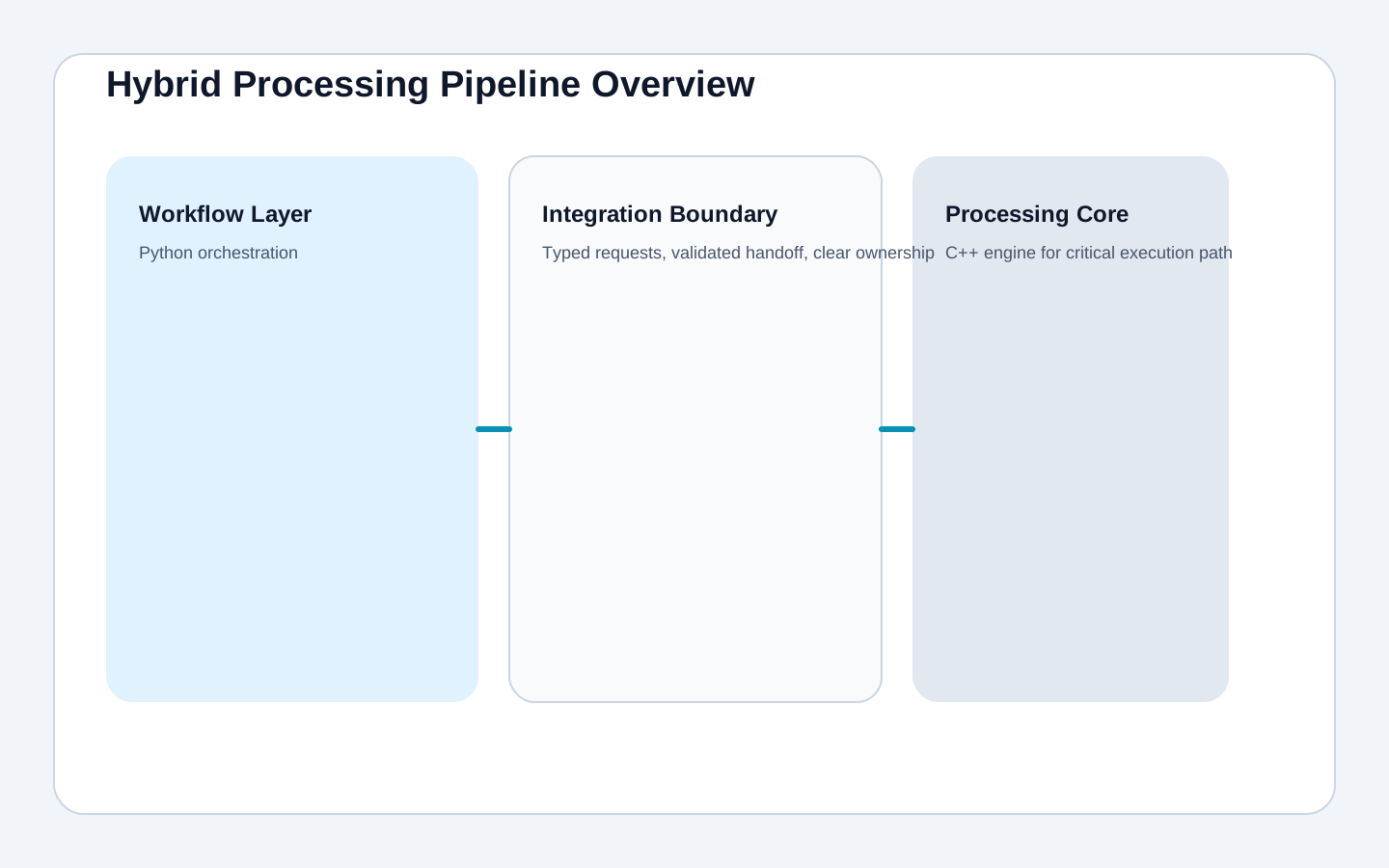
The solution is to separate the system at the point where the responsibilities genuinely diverge. Python handles workflow composition, control flow, and operational coordination so that the product layer stays easier to evolve. C++ owns the lower-level processing path so that runtime cost, throughput, and memory-sensitive behavior can be addressed where they belong. That split makes the architecture more demanding, but it also makes the reasoning behind the system much cleaner.
Challenge and context
The case study starts with the operational pressure or software gap that made this work worth building.
Some systems need two things at once: an orchestration layer that can evolve quickly as the workflow changes, and a processing path that needs more disciplined control over execution. If everything stays in one language, one side usually pays for the other. Either the workflow layer becomes harder to change than it needs to be, or the heavy path ends up living in an implementation model that does not fit its performance demands.
Why this mattered
The project exists to answer a question that shows up often in mixed-language systems: when does a Python and C++ split actually earn its complexity? The answer here is that it only makes sense when the workflow layer and the execution path need different engineering strengths, and the boundary between them can be described clearly enough to justify the cost.
Solution delivered
This summary explains the shape of the solution Strucate put forward in response to the challenge.
The solution is to separate the system at the point where the responsibilities genuinely diverge. Python handles workflow composition, control flow, and operational coordination so that the product layer stays easier to evolve. C++ owns the lower-level processing path so that runtime cost, throughput, and memory-sensitive behavior can be addressed where they belong. That split makes the architecture more demanding, but it also makes the reasoning behind the system much cleaner.
Solution summary
Hybrid Processing Pipeline is a software system built around a deliberate split: Python coordinates the workflow, configuration, and application-level control, while C++ owns the processing path where throughput and runtime behavior materially affect the design. The project exists to show that the split is only worth the extra complexity when each side is solving a different problem clearly.
Delivery scope
This work is framed as company delivery proof, so the scope needs to be clear before the deeper technical sections.
Strucate treated this case study as proof of delivery around a specific software need: shaping the application model, defining the workflow or system boundary, and carrying the implementation far enough that the structure becomes credible as a maintainable foundation.
Engagement focus
The central design choice was to let the language boundary follow responsibility. Python stays at the orchestration edge because that layer benefits from adaptability and clearer coordination. C++ stays on the processing path because that is where lower-level control produces a meaningful architectural advantage.
What the delivery needed to achieve
The goals describe what this engagement or software direction needed to accomplish to count as useful work.
- Show a technically credible reason to use Python and C++ in the same product without turning the split into a gimmick
- Keep orchestration, configuration, and heavy processing responsibilities separated so each layer can be optimized for the right problem
- Make the tradeoff visible: better control and throughput on the critical path in exchange for more integration discipline
Architecture and implementation reasoning
Technical depth still matters, but it is framed here as the reasoning behind the delivered system and the company capability it demonstrates.
The system is split into a Python orchestration layer and a C++ processing layer because they are solving different problems. Python owns coordination, configuration, and the parts of the product that benefit from fast iteration and clearer control flow. C++ owns the lower-level execution path where throughput, memory behavior, and tighter runtime control justify a more deliberate implementation. The architecture is intentional because it keeps the boundary between workflow decisions and processing work visible instead of blending them into one layer for convenience.
Key technical decisions
- Python stays at the orchestration boundary because changing workflow behavior, configuration, and coordination logic should stay relatively cheap
- C++ is reserved for the critical processing path so performance, memory behavior, and runtime control stay in the layer where they actually matter
- The language boundary is treated as part of the architecture, which means the integration contract has to stay explicit instead of being hidden inside ad hoc glue code
Tradeoffs accepted
- Splitting responsibilities across two languages keeps the architecture honest, but it adds integration work, boundary design, and more explanation overhead
- A native processing boundary can improve runtime control and throughput, but it slows the path to a simple all-in-one prototype and raises the cost of debugging across layers
- Keeping the orchestration layer flexible makes workflow changes easier, but it only pays off if the handoff into the C++ path stays disciplined and well defined
Delivery challenges
These points show where the work required extra care to keep the system coherent, explainable, and implementation-ready.
- Making the language split feel necessary in engineering terms rather than cosmetic in delivery terms
- Describing the orchestration-to-engine boundary clearly enough that the system still reads as one product instead of two disconnected parts
Outcomes and operational value
Where direct client metrics are unavailable, the outcomes stay company-safe and focus on the operational or engineering value established by the work.
- A stronger company work example for explaining hybrid C++ and Python delivery in terms of system boundaries rather than broad stack claims
- A project narrative that makes the benefits and the cost of the split visible at the same time
- A clearer example of how one layer can stay optimized for iteration while another stays optimized for tighter execution control
Future improvements
These next steps show how the current implementation could be extended without changing the core delivery direction.
- Add stage-by-stage benchmark data so the value of the native processing boundary can be discussed in concrete terms
- Show request flow, configuration handoff, and result-return paths so the orchestration boundary is easier to inspect visually
- Document error handling and boundary contracts more explicitly so the integration cost is visible alongside the performance benefit
Future direction
This is the next company-safe direction for deepening the delivery proof if the case study or system is expanded later.
The next useful step is to make the boundary measurable. Benchmarks, stage timing, and failure-handling examples would turn the architecture from a justified design into a demonstrated performance story.
Continue through the work
These additional case studies help show the range of delivery proof across the current company work profile.
Case study snapshot
- Category
- Hybrid C++/Python Systems
- Delivery focus
- The central design choice was to let the language boundary follow responsibility. Python stays at the orchestration edge because that layer benefits from adaptability and clearer coordination. C++ stays on the processing path because that is where lower-level control produces a meaningful architectural advantage.
- Status
- planned
- Stack
- Python · C++ · TypeScript · Structured Content
Project Links
Tags
How to read this case study
Technical depth stays in the case study, but the reading order now starts with challenge, solution, scope, and outcomes before moving into deeper implementation reasoning.
Use the opening sections to understand the delivery context first, then move into the architecture, technical decisions, and implementation tradeoffs that shaped the work.