Strucate Systems

Founder-led software engineering company

Operational software shaped with clear system boundaries and deliberate C++ / Python decisions.

Strucate Systems designs and builds operational software for teams that need clearer workflows, sturdier tools, and implementation choices that stay explainable as systems grow.

Work

Selected work that shows how Strucate approaches operational software delivery.

The work section shows how Strucate frames software problems, delivery scope, and implementation tradeoffs as company capability and delivery proof.

The examples here show what Strucate builds, how delivery scope is framed, and what kind of implementation decisions shape the resulting software.

Work snapshot

Work examples
2
Featured
2
Categories
2
Purpose
Company-owned delivery proof

What this work demonstrates

These work examples should help a visitor understand what Strucate is built to support before they decide whether to open a case study or start a conversation.

  • Examples of workflow software and hybrid systems delivered with clear ownership between interface, application logic, and processing responsibilities
  • Proof that Strucate can move from operational problem framing into bounded implementation decisions and explainable system structure
  • Work that shows where Python accelerates orchestration and application control, and where C++ earns its place through tighter runtime control
  • A starting point for evaluating fit before moving into a project conversation

Some examples show workflow software that benefits from a clearer operational model. Others show hybrid systems where language choice and system boundaries materially affect the design.

Why this page exists

The purpose is to give a team enough delivery evidence to judge whether Strucate is the right fit for the software problem it needs solved.

Selected work

Each card is a compact summary of what the software had to support, why the shape of the system mattered, and what kind of engineering judgment the work required.

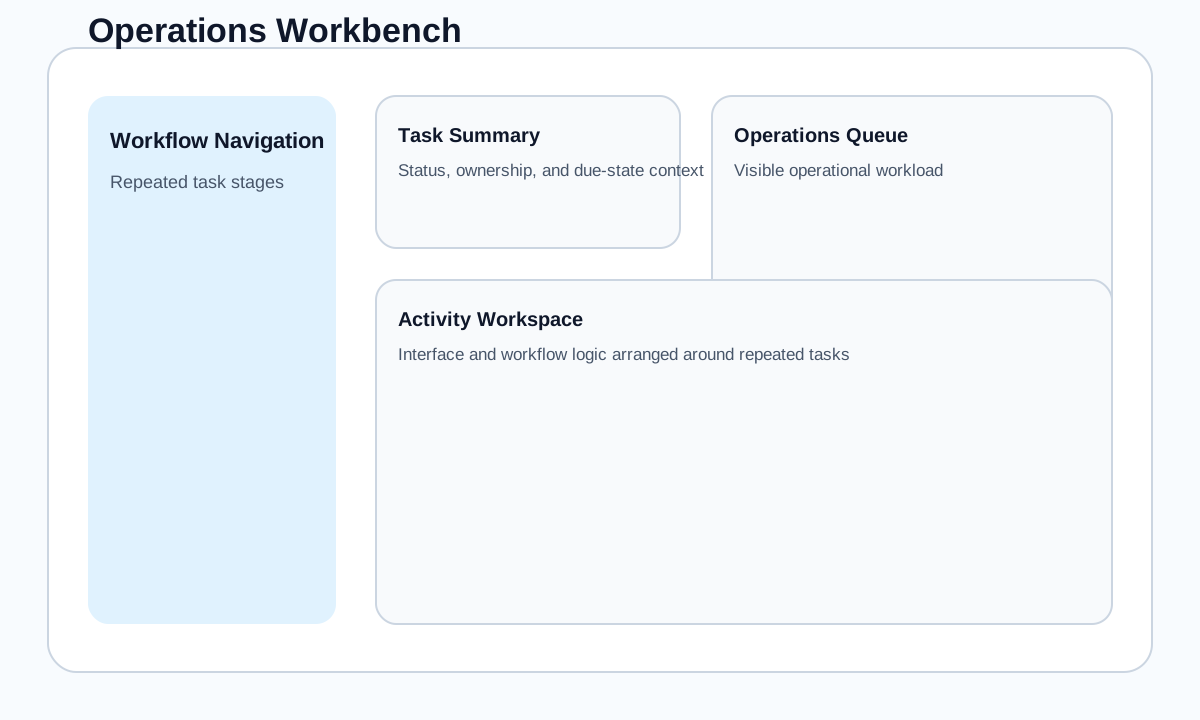
Operations Workbench work preview
Tailored Desktop Applicationsin-progress

Operations Workbench

A workflow tool built around the idea that repeated operational work should be modeled in software directly, not patched together through spreadsheets and process memory.

Challenge addressed

The project exists to make one point clearly: once repeated operational work starts depending on scattered spreadsheets, undocumented handoffs, and operator memory, the problem is no longer just inconvenience. It is a software design problem, and a dedicated interface only becomes useful when it is backed by workflow logic that can carry the process forward.

Solution delivered

A delivery case study about recurring operational work that becomes fragile when it lives across spreadsheets, notes, and memory instead of inside a dedicated workflow tool.

Why it mattered

A clearer delivery proof example for internal software that earns its value by reducing ambiguity in repeated work

Capability shown

The most important decision was to treat repeated operational work as an application problem, not a dashboard problem. Once that was clear, the right shape was a dedicated interface backed by explicit workflow logic rather than a loose collection of screens and status badges.

Stack snapshot

TypeScript · Next.js · Tailwind CSS
Desktop AppWorkflow SystemReusable ComponentsIn Progress
Hybrid Processing Pipeline work preview
Hybrid C++/Python Systemsplanned

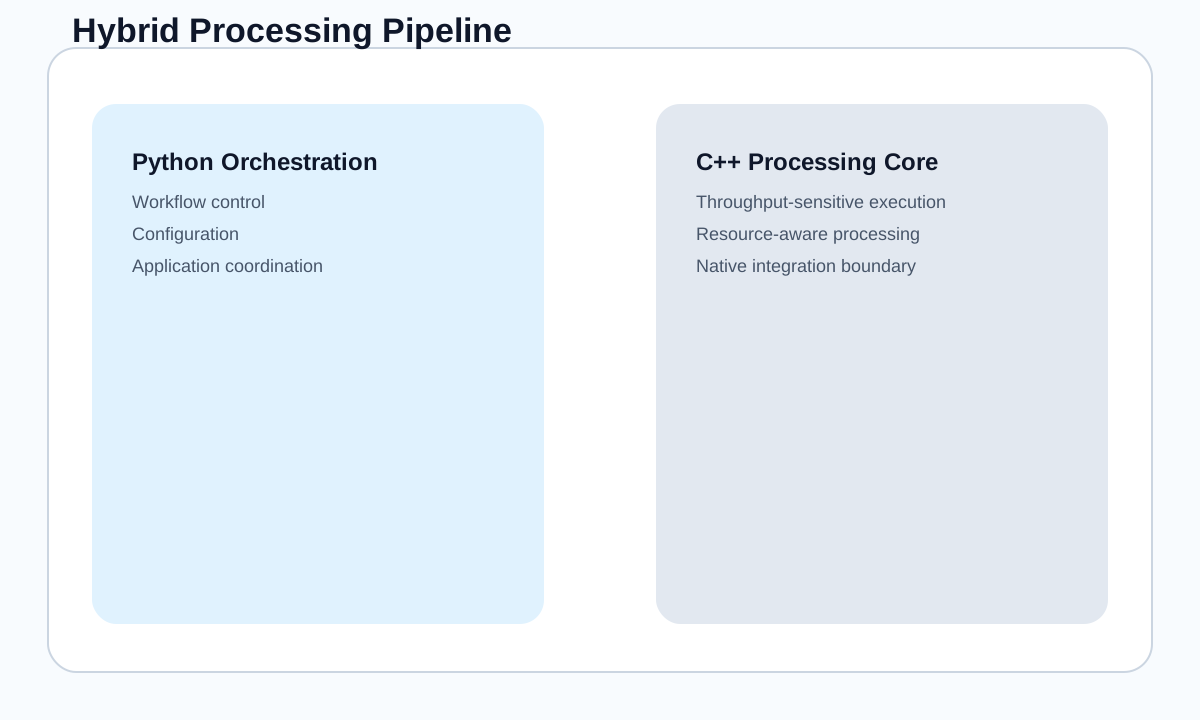
Hybrid Processing Pipeline

A hybrid pipeline that keeps workflow orchestration in Python and moves throughput-sensitive execution into C++ because the boundary changes what the system can do, not just how it is described.

Challenge addressed

The project exists to answer a question that shows up often in mixed-language systems: when does a Python and C++ split actually earn its complexity? The answer here is that it only makes sense when the workflow layer and the execution path need different engineering strengths, and the boundary between them can be described clearly enough to justify the cost.

Solution delivered

A delivery case study about using Python and C++ together only when the architectural boundary is doing real work rather than just making the stack sound broader.

Why it mattered

A stronger company work example for explaining hybrid C++ and Python delivery in terms of system boundaries rather than broad stack claims

Capability shown

The central design choice was to let the language boundary follow responsibility. Python stays at the orchestration edge because that layer benefits from adaptability and clearer coordination. C++ stays on the processing path because that is where lower-level control produces a meaningful architectural advantage.

Stack snapshot

Python · C++ · TypeScript

C++ EnginePython UINative IntegrationPerformance

Continue from the work

If the work looks aligned, the next useful step is to review how Strucate approaches delivery or move directly into a project conversation.